Ice Cream for Bears Chocturnal Review

Ice Cream for Bears Chocturnal Is Better Than Butterbear—but Still Not Worth Buying Again
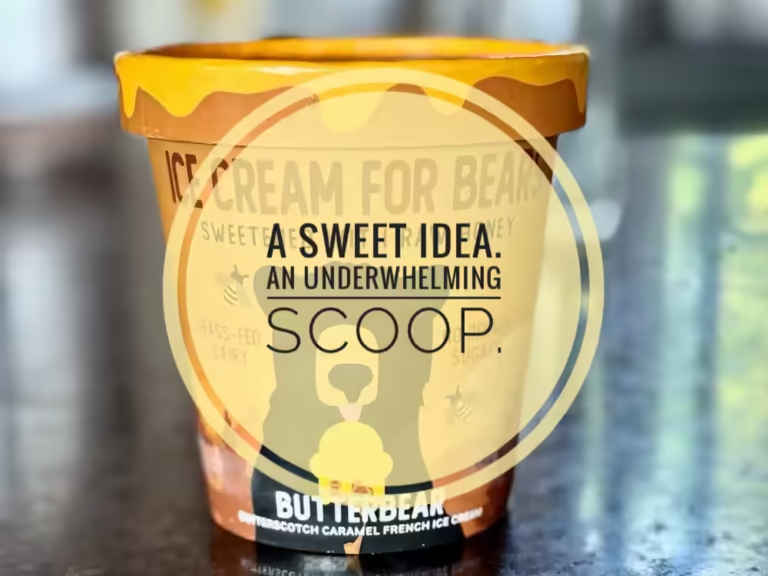
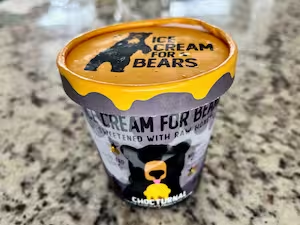
I was incredibly let down by Ice Cream for Bears’s Butterbear flavor, so I decided to try another one of their options. I chose Chocturnal because chocolate seemed like a good baseline: it’s a straightforward flavor without any inclusions, making it easier to judge the quality of the ice cream itself without other ingredients getting in the way.
I’d love to report that Chocturnal is way better than Butterbear. And, although it is a definite improvement, it’s also a letdown. Here’s why.
Triple Chocolate? Not Even Close.
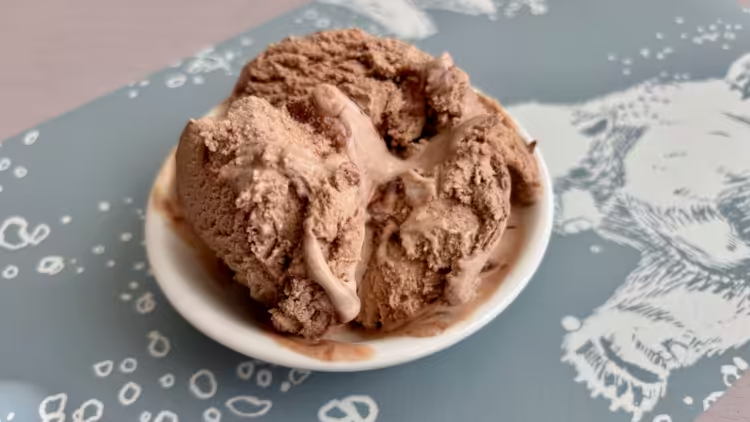
The chocolate flavor is certainly present and unmistakable in this ice cream. And yet it’s also incredibly muted. Over the years I’ve tried many chocolate ice creams that range from “mildly” chocolate to “assertive”. The flavor of Chocturnal is so restrained that it makes those “mild” chocolate ice creams taste like a flavor explosion.
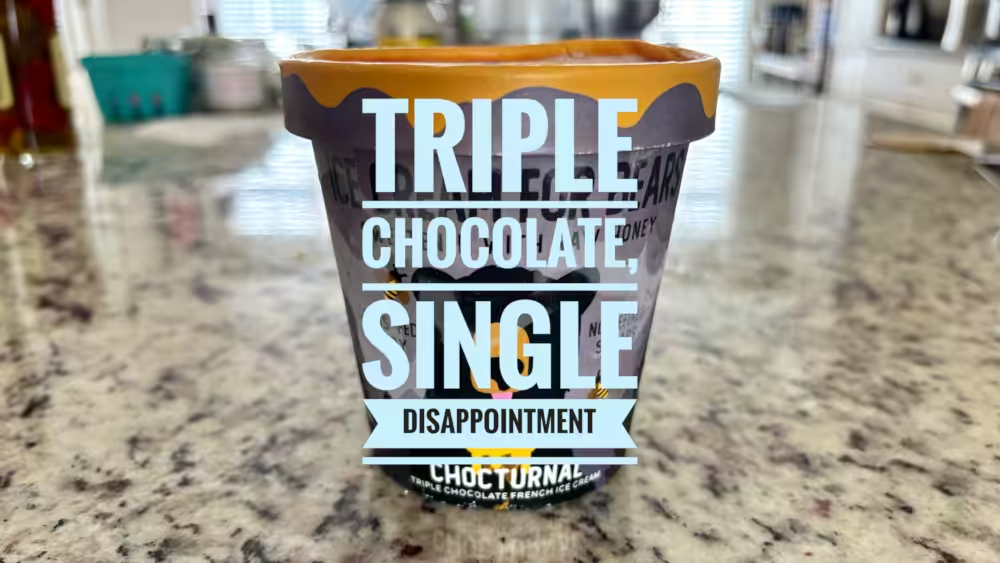
What’s baffling is that the container calls this “triple chocolate”1, implying that a nice, big chocolate flavor is waiting inside.
The Good News
It Actually Tastes Like Real Chocolate
The good news is that this ice cream actually tastes like real chocolate. Unlike Butterbear, which relies solely on natural flavorings for its signature butterscotch-caramel taste, Chocturnal’s flavor comes from cocoa and fudge.
No Coarse Texture This Time
Unlike the carton of Butterbear I sampled, Chocturnal had no coarseness. That makes me more confident that the texture problem with Butterbear was a defect rather than something inherent to Ice Cream for Bears’s products (though the fact that it happened at all is concerning).2
What About the Grass-Fed Dairy?
Ice Cream for Bears makes a point of using dairy from grass-fed cows. Although grass-fed dairy doesn’t necessarily taste better than conventional dairy, I can say from my own experience making ice cream that the quality of the milk and cream can make a meaningful difference to the finished product.
It’s not that conventional dairy is bad. Instead, I’ve found that higher-quality dairy can impart a hard-to-describe character that makes ice cream taste just that much better. (Of course, I can’t rule out the possibility that my expectations influences my perception—though Dana Cree would agree with me!)
So when ICB makes such a point of using grass-fed dairy, I expect something notable from the dairy component of its ice cream. That’s a pretty low bar, and yet the dairy flavor is heavily muted.
This leads to a one-two punch: neither the dairy nor the chocolate is particularly flavorful. Unfortunately, that combo is also a knockout: this is a “premium” ice cream that tastes anything but.
Regenerative Agriculture is a Bonus, Though
One point I’d like to linger on: ICB says it sources dairy from farms that practice regenerative agriculture. That’s a commendable choice.
Regenerative farming practices aim to improve soil health, support biodiversity, and, in some circumstances, increase the amount of carbon stored in soil. The environmental benefits depend on the specific practices and conditions, but there’s good reason to support efforts to make agriculture more sustainable.
So while I haven’t been impressed by ICB’s ice cream, I do appreciate its approach to dairy sourcing.
Overall: Premium Ingredients, Underwhelming Ice Cream
The lack of coarseness and the pleasant (if muted) chocolate flavor made Chocturnal a huge upgrade over Butterbear. But “better than Butterbear” is a pretty low bar.
Chocturnal isn’t bad ice cream. It tastes…fine and doesn’t have any discernible flaws. But that’s precisely the problem: this is a premium-priced ice cream with premium ingredients, yet it offers less flavor than many mass produced alternatives. There’s nothing about the eating experience that’s particularly special or interesting.
This isn’t just my feeling. Here’s what Mrs. The Snacks Guy said: “Ice Cream for Bears is possibly the saddest ice cream I’ve ever had.”
I actually purchased two containers of Chocturnal—on separate occasions and from separate stores—and neither left me wanting more. Add to that my similarly disappointing experience with Butterbear and I’m left with little reason to buy Ice Cream for Bears again.
So, Who Is Chocturnal For?
All of this leaves me wondering: who is this ice cream for? After all, it’s expensive at $8 per “pint”3 and its flavor is totally uncompelling.
Maybe it’s the use of honey that draws people in, or how ICB sources their dairy.
But even if honey provides some marginal health benefit over refined sugar, we’re still talking about ice cream: a sugar- and fat-heavy treat. If I’m going to eat ice cream, I want it to be genuinely enjoyable.
One final comment about The Snacks Guy. I started this site to put the spotlight on products I love. My goal is not to be negative—the internet already has enough negativity. When I discover something particularly good, I want to share it with others, which is why so many of my reviews are positive.
But that doesn’t mean every review will be positive. If I try a product that that’s expensive and fails to live up to its promises, I’m going to highlight that. After all, part of reviewing products isn’t just about helping people discover great ones, it’s also about helping them avoid the disappointing ones—and save them money in the process.
- Curiously, the ingredient list only shows two chocolate components: fudge and cocoa. Whatever ICB meant by “triple chocolate”, the flavor certainly doesn’t live up to the name. ↩︎
- Many food brands don’t actually manufacture their own products. Instead, they work with co-manufacturers: third-party companies that produce food on their behalf. It’s possible that ICB uses such an arrangement, in which case the defect could have originated with its manufacturing partner. Ultimately, though, ICB is still responsible for the quality of the ice cream sold under its name. ↩︎
- As I mentioned in my Butterbear review, ICB’s “pint” isn’t actually a full pint. Despite being described as a “pint”, the container holds only 14 fl oz (414 mL), rather than the standard 16 fl oz (473 mL)—12.5% less ice cream. ↩︎